
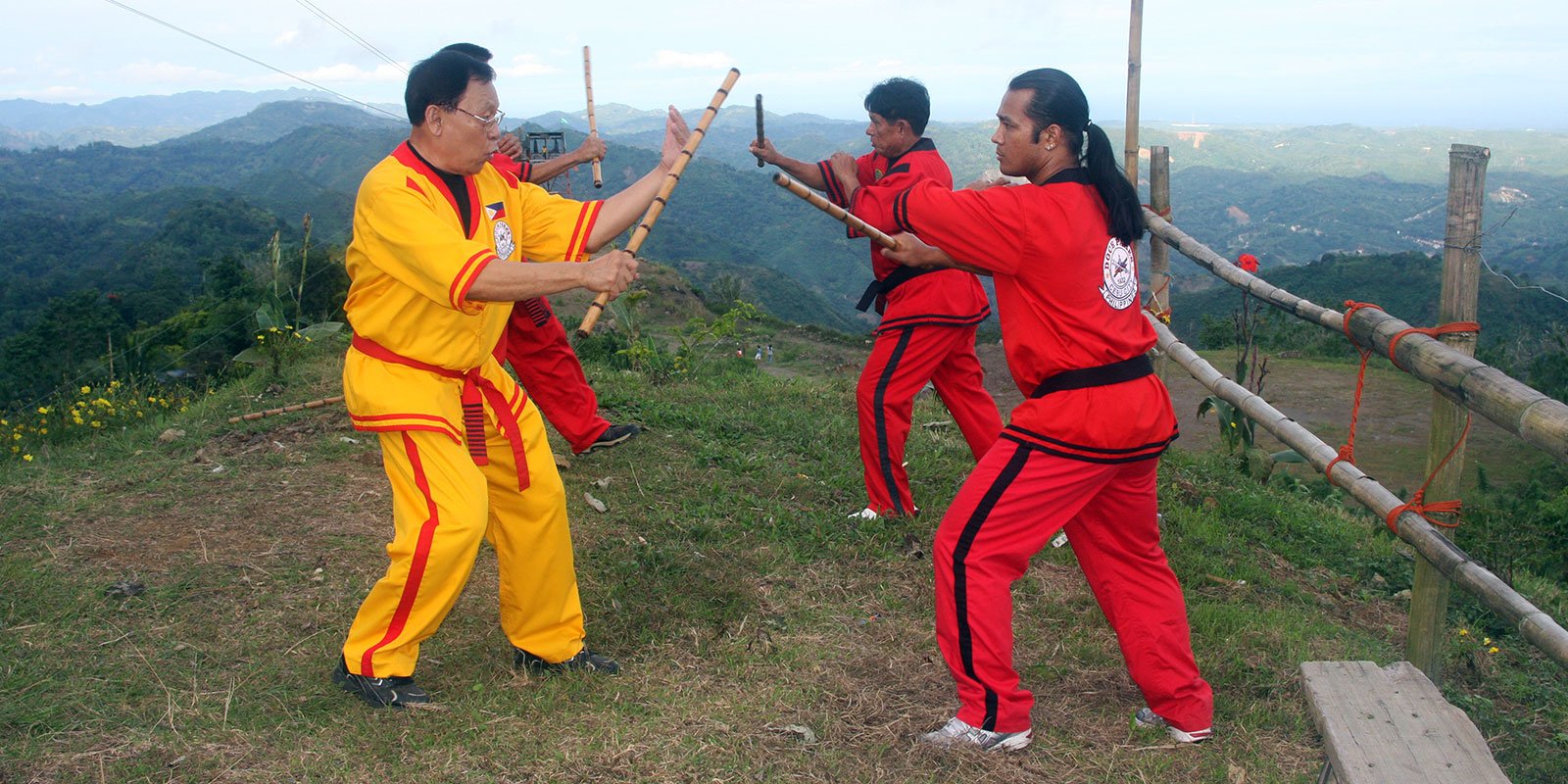
Founded in Cebu, Philippines
Main weapon and empty-hand components
Fighting ranges
Grades on a 5-year path
What is Eskrima?
A complete system
Eskrima, also known as Arnis or Kali, is an indigenous Filipino martial art. It trains with sticks, knives and daggers, espada y daga (sword and dagger) and bangkaw (staff or spear), as well as mano-mano: empty-hand striking, locks, takedowns and grappling.
We follow the official 5-year curriculum of Supreme Grandmaster Dionisio Cañete (ODL). All Doce Pares International schools share the same seal and logo, and teach the same multi-style programme.


The gathering of masters
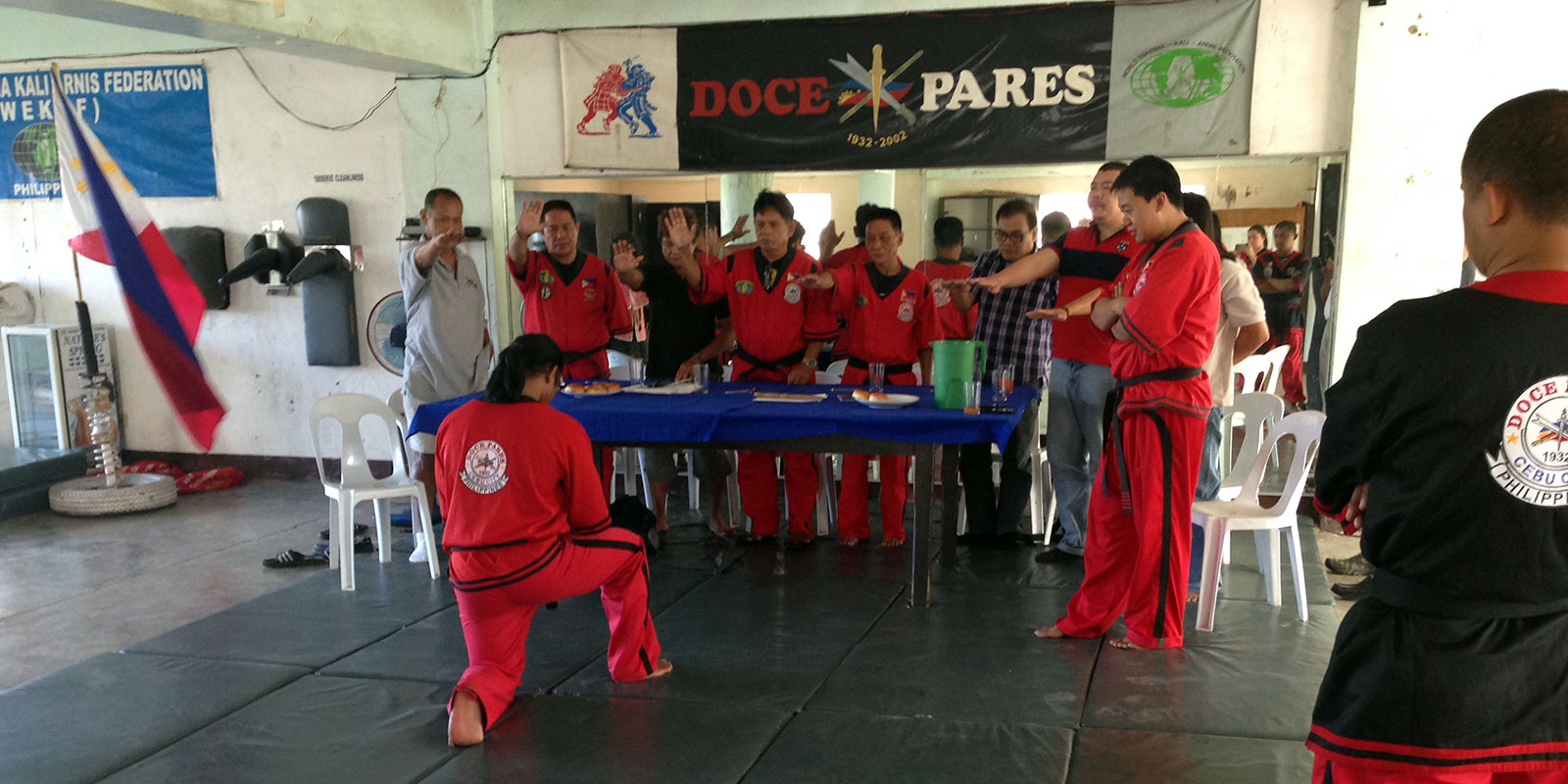
Doce Pares is founded in Cebu as a gathering of masters, each bringing their own art into one organisation.
A “supermarket” of styles
Larga Mano, Espada y Daga, Corto Linear, Corto Orihinal, Media Largo, Hirada and Retirada, Mano-Mano and Baraw, Corto Kurbada and Abaniko.
The Multi-Style System
President Eulogio Cañete asks his son, Dionisio “Diony” Cañete, to build one programme that preserves every founding style equally.
Three branches
San Miguel (GM York Cañete), Cacoy Doce Pares (GM Chuck Cañete) and the Multi-Style System (GM Gerald Cañete).
Multi-Style
We follow the Multi-Style System, training the full spectrum of traditional Doce Pares styles in a modern, structured and practical way.
Watch the system
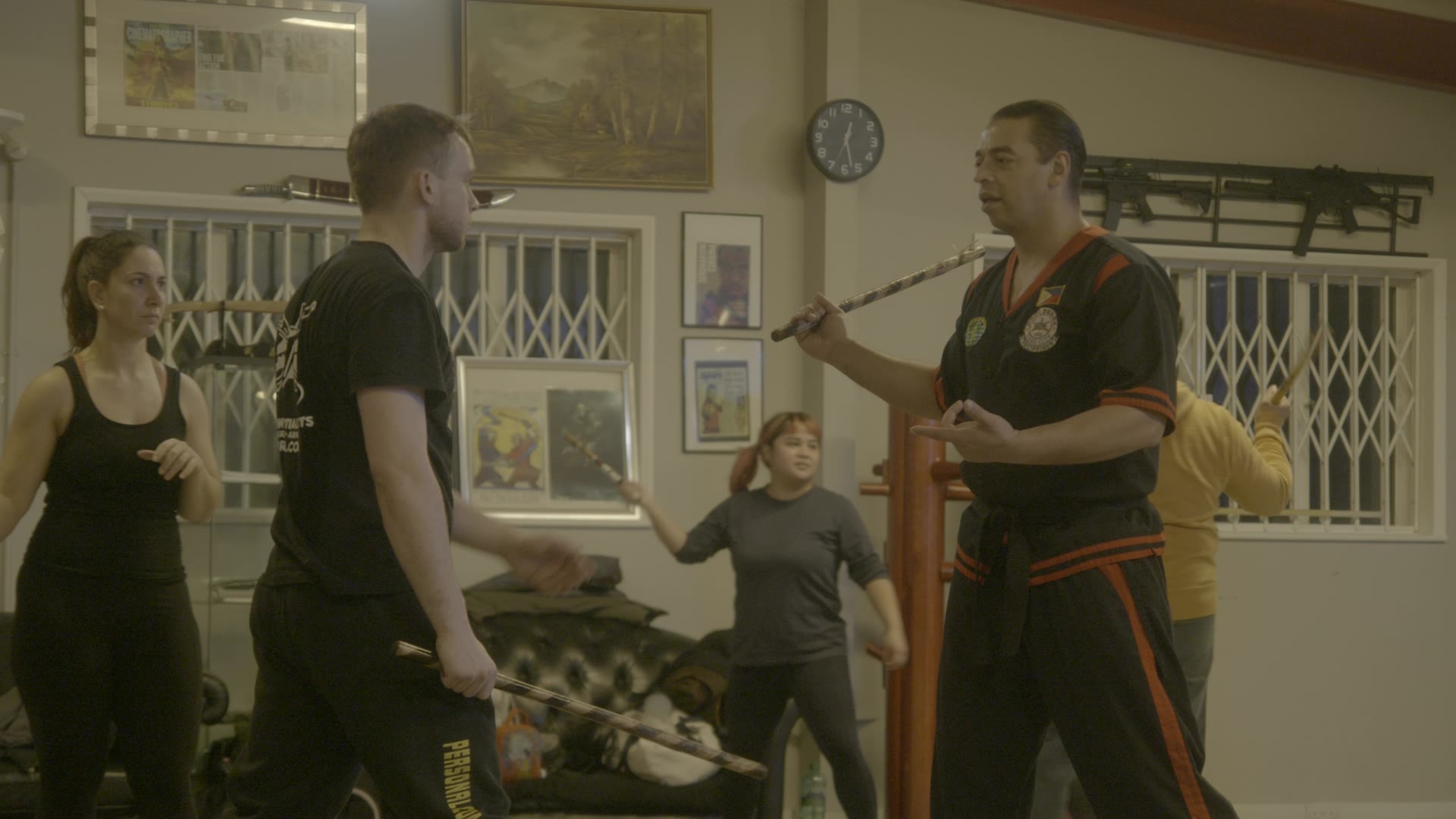
Doce Pares in action
Forms, drills and techniques from the Multi-Style curriculum, taught by Master Alex.
Forms
Sayaw Uno
Form 1 of the Doce Pares curriculum.
Forms
Sayaw Dos
Form 2 of the Doce Pares curriculum.
Forms
Sayaw Tres with machete
Form 3 performed with a machete.
Long stick
Bangkaw freestyle form
Long stick form.
Double stick
Sinawali
Double stick weaving drill.
Single stick
Basic counters
Doce Pares basic counters.
Knife
Knife disarm
Doce Pares Eskrima knife disarm.
Knife
12 angles of attack
Knife drills on the 12 angles.
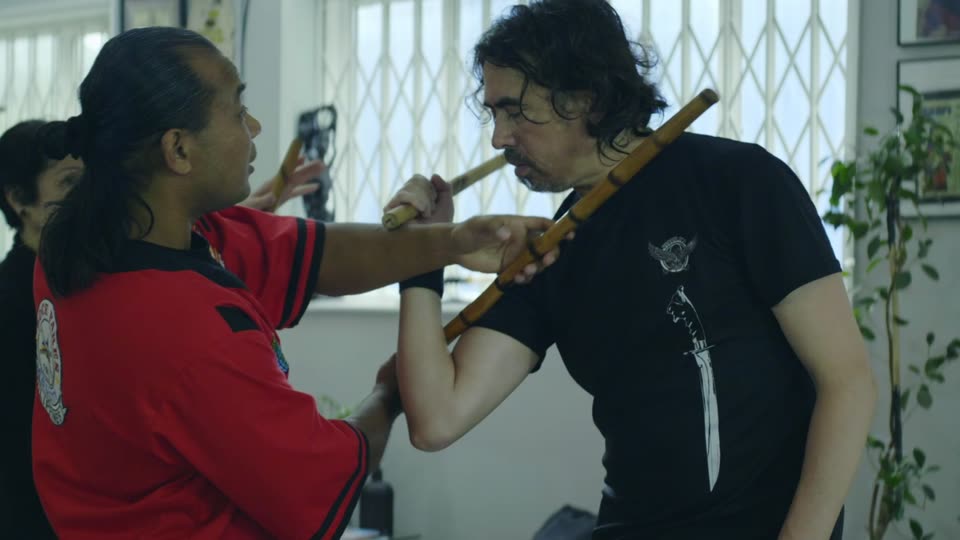
Your first class
Step onto the mat
No experience needed. Wear comfortable sports clothes and bring water.